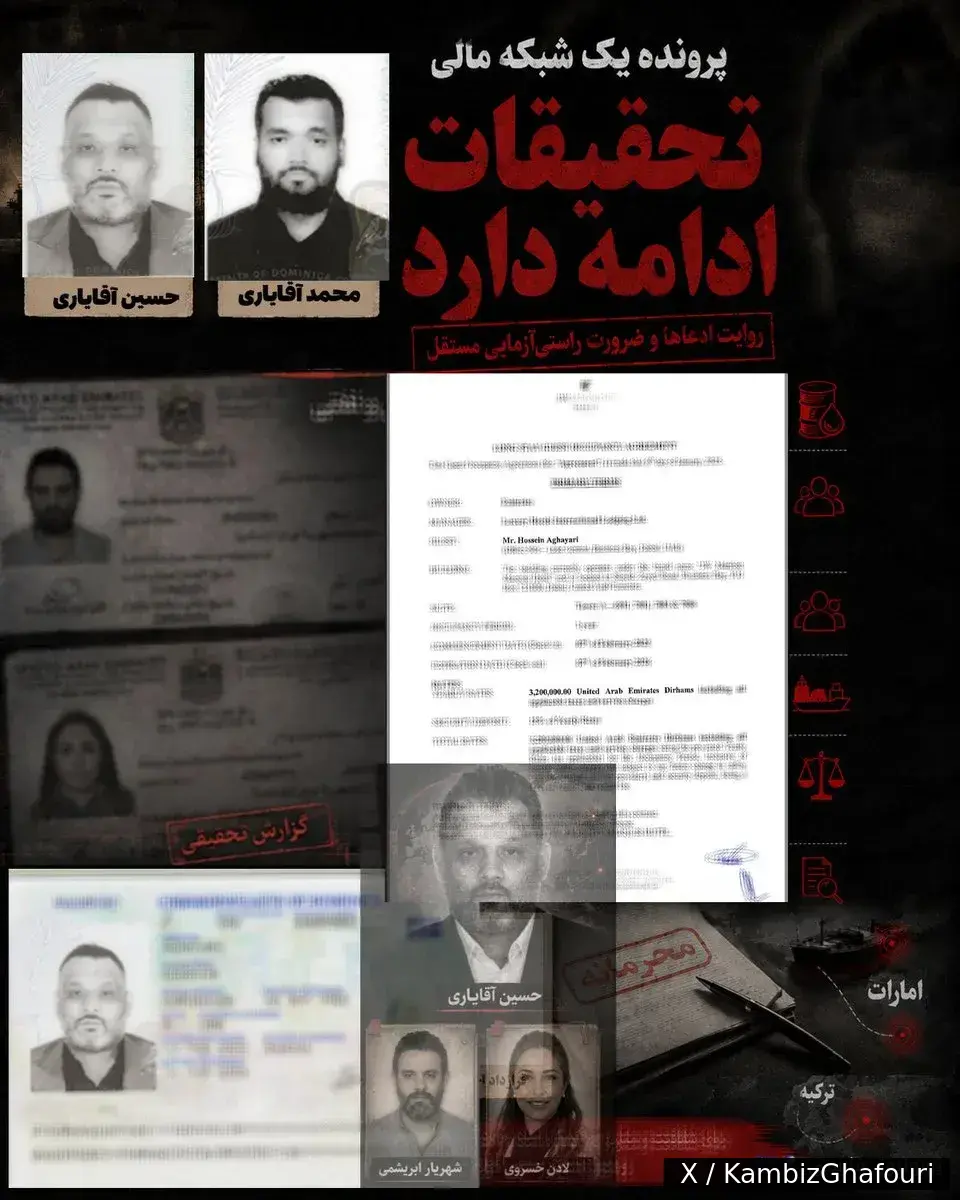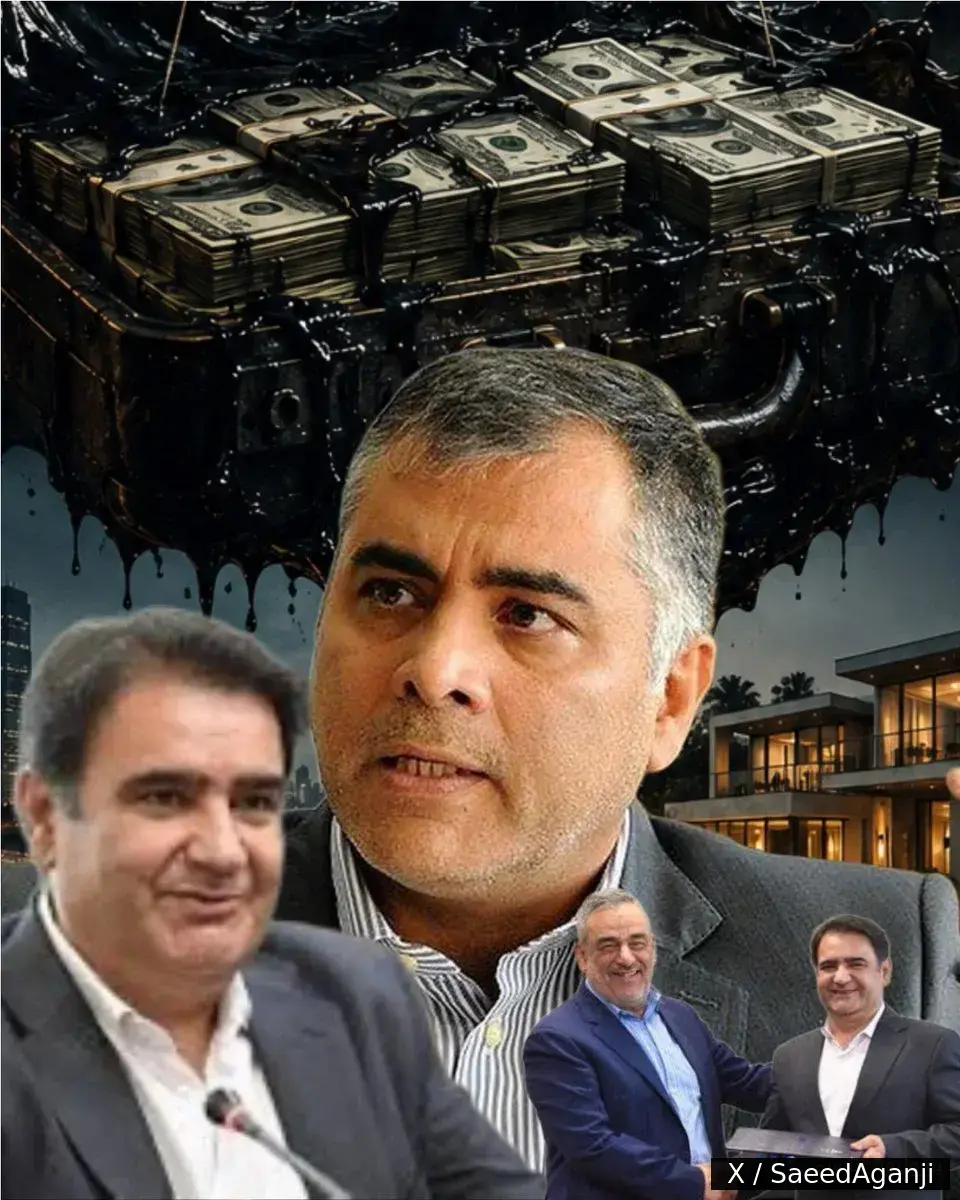
The two or three posts I shared on X have piqued the curiosity of many of my friends regarding the case of trusts and Hossein Aghayari. If you have noticed, we haven't had evening snacks for a few days; because I have been busy examining this case around the clock to produce a precise and reliable video evening snack about this matter.
Targeted and Multi-layered Mechanism
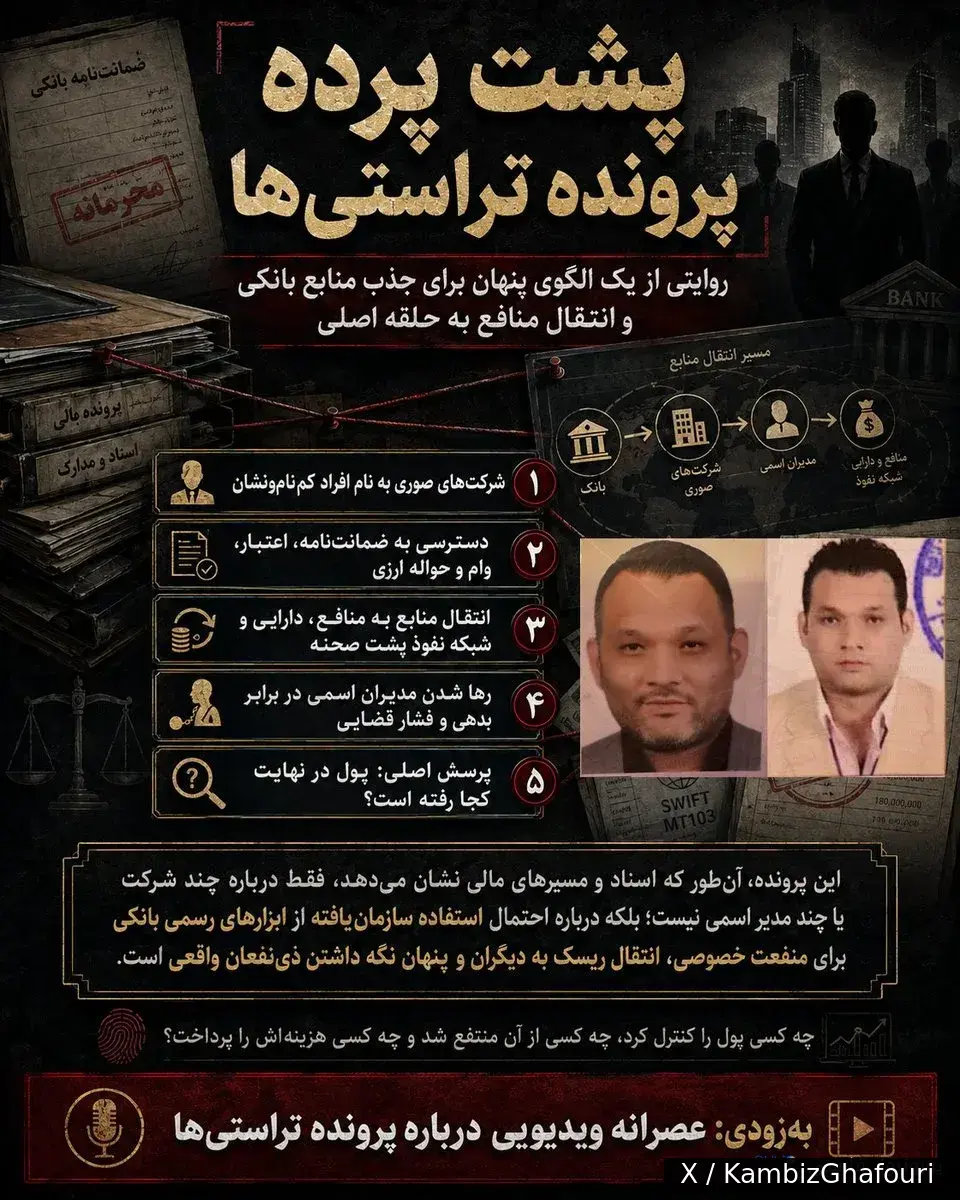
What I have seen so far cannot be explained by a single violation or limited financial abuse. The collection of documents, financial pathways, and my observations provide a picture of a targeted and multi-layered mechanism in which, in my belief, Hossein Aghayari and his close associates have used seemingly independent companies and nominal managers to attract banking resources and transfer the benefits to their core circle.
The recurring work pattern is as follows: companies named after individuals without serious economic backgrounds enter the scene, gaining access to guarantees, credit, letters of credit, loans, and foreign remittances through banking connections, but the resources obtained are directed not towards the actual activities of the company, but towards a path that leads to the interests, assets, and influence networks of the individuals behind the scenes.
The Gap Between the Official Manager and the Real Beneficiary
Part of this money, based on what I have investigated, is spent on purchasing property and vehicles, displaying wealth, getting close to influential individuals, and building a reputation that itself facilitates attracting more resources. Here, money has not only been a goal; it has also been a tool for generating power, influence, and credibility.
The crucial point of the matter arises when debts and banking obligations come due. The companies and nominal managers remain in front of creditors, banks, and the judiciary, but those whom I consider to be the decision-makers and real beneficiaries are either not present in the formal structure or their relationship is structured in such a way that they can deny direct responsibility. As a result, the pressure falls on the one whose name is on paper, not necessarily the one who benefited from the money.
In my opinion, this very gap between the "official manager" and the "real beneficiary" is the heart of this mechanism. The formal traces may have faded, but the financial traces remain: accounts, remittances, payments, correspondence, movements, asset purchases, and the chain of money transfer can reveal who controlled the resources and who profited from them.
Therefore, the issue is not just about a few companies and a few nominal managers; it is about the possibility of organized use of official banking tools for private benefit, transferring risk to others, and concealing the real beneficiary. The main question of this case for me is very simple: where has the money ultimately gone, who controlled it, who benefited from it, and who bore the cost and responsibility? A documented answer to these four questions can clarify a large part of the reality of this network.
P.S.: Keep an eye on Mohsen Paknejad, the Minister of Oil!